The Connection Between Hip and Knee Pain
Did you know that for a lot of people, their knee pain is not actually due to a problem with the knee, but one with the hip? At Pelham Physical Medicine, we frequently observe that a problem originating in the hip can be first felt as knee pain and vice versa.
You might wonder how this is possible. The answer lies in what’s known as the kinetic chain, where the hip and knee joints work together. The interconnection means that an imbalance or dysfunction in one joint can lead to compensation and pain in the other. The good news is our therapists can help you figure out the source of your pain and, more importantly, guide you back to health.
To move towards a healthier, active life, we recommend you consult with one of our physical therapists as soon as possible!


Patient Success Story
“I came in for a herniated disc & fissure in my lower back. The PT regimen I followed was challenging & helpful to get me back to full duty. So grateful for all the help over the three months we worked on my injury. The young ladies at the front desk were very polite, understanding, & flexible with scheduling which was just perfect for my light duty schedule. The PT staff was so friendly & considerate of my injury & very proficient in their abilities. Highly recommend for any MOS who work in the Bronx, the Rock, or live up north.”
– T.P.
Your Guide to Recognizing the Signs and Symptoms of Hip and Knee Pain
At Pelham Physical Medicine, we believe in a holistic approach to healing. As musculoskeletal experts, we are trained to pinpoint the root cause of your condition, differentiate between hip and knee pain, and develop a plan that addresses the whole person, not just the symptom.

The Telltale Signs of Hip Pain
- Localized Discomfort and Stiffness: Hip pain generally starts as a localized discomfort in the groin area, often accompanied by stiffness restricting the range of motion. As the severity worsens, this pain can sometimes extend to the thigh and even the knee.
- Morning Stiffness: One of the most commonly reported symptoms is morning stiffness, which typically eases as the day progresses.
- Difficulty in Performing Daily Activities: Individuals with hip pain often find it challenging to bend over to tie shoes or pick up objects from the floor. This pain can intensify during movements like getting up from a seated position or walking uphill.
Classic Indicators of Knee Pain
- Localized Pain and Swelling: A primary indicator of knee issues is localized pain, often accompanied by swelling. This can be especially noticeable after prolonged periods of activity.
- Stiffness and Reduced Range of Motion: Another hallmark of knee pain is stiffness, which often restricts the knee’s range of motion.
- Popping or Crunching Noises: Experiencing popping or crunching noises during knee movement is a sign that shouldn’t be ignored, as these sounds often signify underlying knee issues.
- Difficulty in Bearing Weight: A large number of individuals with knee pain report difficulty bearing weight on the affected knee. This is often described as a feeling of weakness or instability, making activities such as climbing stairs or even simple walking difficult.
While interconnected, the hip and knee are distinct structures with unique roles in our body’s movement and different responsibilities. Understanding these differences is vital in diagnosing and treating pain effectively. This is where the expertise of our physical therapists can help!
Navigating the Path to Recovery with Pelham Physical Medicine
At Pelham Physical Medicine, our physical therapists will conduct a comprehensive evaluation, and distinguish whether you’re dealing with an issue in your hip, knee, or both.
After completing the evaluation, we’ll design a program focusing on the actionable steps you can take to ensure long-term relief and prevention of future injuries, including the following:
- Tailored Therapeutic Exercises: Our therapists will provide you with stretching and strengthening exercises to help restore your mobility and function. For example, eccentric training focuses on elongating a muscle under tension, proving particularly effective in strengthening muscles and improving mobility.
- Neuromuscular Re-education: This involves using exercises and manual techniques to restore normal muscle function and movement patterns. These techniques are especially effective in reducing pain and enhancing function, especially in individuals with hip and knee pain.
Our therapists go beyond the surface, digging deep into your symptoms to identify the underlying issues and determine the true origin of your pain, whether the hip, the knee, or both. Our goal is to build a program that helps you get back to living your best life!
Meet Our Team



Follow These Simple Steps to a Pain-Free Life
Are you ready to embrace a lifestyle that promises better mobility and less pain? At Pelham Physical Medicine, we are here to guide you every step of the way, fostering a future where you feel better, move better, and live better! Call today to schedule an appointment!
Recipe of the Month: Salmon Burgers

Ingredients:
- 4 boneless, skinless salmon fillets about 1lb 4oz in total, cut into chunks
- 2 tbsp Thai red curry paste
- thumb-size piece fresh root ginger, grated
- 1 tsp soy sauce
- 1 bunch coriander, half chopped, half leaves picked
- 1 tsp vegetable oil
- lemon wedges, to serve
For the salad:
- 2 carrots
- half large or 1 small cucumber
- 2 tbsp white wine vinegar
- 1 tsp golden caster sugar
Instructions:
- Tip the salmon into a food processor with the paste, ginger, soy and chopped coriander. Pulse until roughly minced.
- Tip out the mix and shape into 4 burgers. Heat the oil in a non-stick frying pan, then fry the burgers for 4-5 mins on each side, turning until crisp and cooked through.
- Meanwhile, use a swivel peeler to peel strips of carrot and cucumber into a bowl. Toss with the vinegar and sugar until the sugar has dissolved, then toss through the coriander leaves.
- Divide the salad between 4 plates. Serve with the burgers and rice.
How Hip-Strengthening Exercises Can Help Alleviate Knee Pain
You may be surprised to know that the functioning of our knees is directly linked to the strength and stability of our hip muscles. Our hip muscles play a vital role in maintaining the alignment and stability of the knee joint.
Hip-strengthening exercises enhance the knee’s support system, helping evenly distribute the forces that travel through it during daily activities. A strong hip musculature can help prevent the knee from adopting faulty movements and positions, often leading to pain.
Hip exercises can also help improve posture and alignment, which is vital in preventing knee strain and subsequent pain. At Pelham Physical Medicine, we’ll guide you in adopting these exercises into your daily routine, a step towards a life marked by greater mobility and less pain.
Seeking Guidance at Pelham Physical Medicine
At Pelham Physical Medicine, we’ll guide you through the exercises that ensure you reap the maximum benefits while maintaining safety and efficiency. Our approach is always holistic, emphasizing the role of the hips as crucial players in alleviating knee pain and facilitating overall health and well-being.
Here are some highly effective hip-strengthening exercises that have been shown to lessen knee pain:
- Hip Bridges: The bridge focuses on enhancing the strength of the hip extensors (buttock muscles) to help provide better support to the knee structure.
- Clamshells: This exercise is effective in strengthening the hip abductor muscles. By lying on your side and opening and closing your legs like a clamshell, you work on the muscles that are essential in maintaining knee alignment.
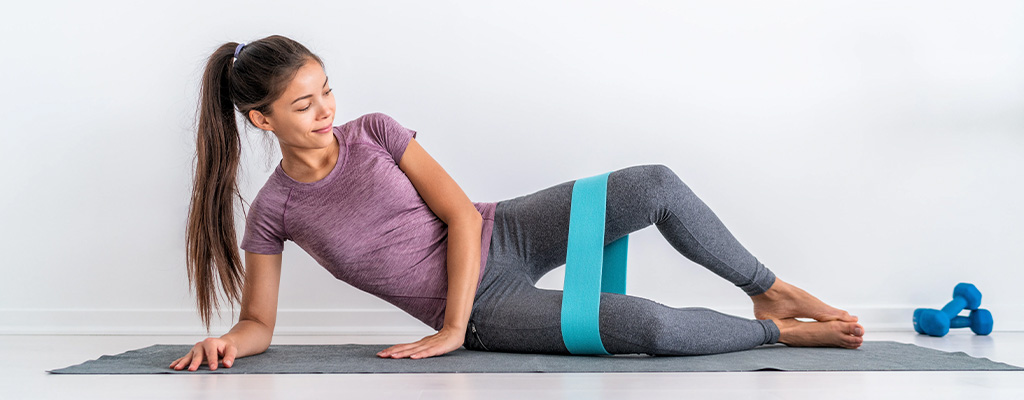
- Side-Lying Hip Abductions: This exercise is a powerhouse in bolstering the hip muscles, primarily targeting the gluteus medius. This vital muscle aids in stabilizing the hips and knees. Engaging in this exercise can be a game-changer in alleviating knee pain.
- Quadruped Hip Extensions: Another fantastic exercise that strengthens the hip muscles and promotes a stable core, creating a well-balanced support system for your knees.
These hip-strengthening exercises can provide stability and support to the knee, potentially reducing the strain and consequent pain.
Taking the Next Step
Remember, the journey to wellness is an ongoing process, and we are here to walk with you every step of the way. Ready to take a step towards a brighter, pain-free future? Call Pelham Physical Medicine today to get started!
Sources
- https://www.bbcgoodfood.com/recipes/superhealthy-salmon-burgers
- https://pubmed.ncbi.nlm.nih.gov/32643252/,
- https://pubmed.ncbi.nlm.nih.gov/31621559/,
- https://pubmed.ncbi.nlm.nih.gov/30407271/,
- https://journals.lww.com/jgpt/fulltext/2020/04000/hip_muscle_strengthening_for_knee_osteoarthritis_.6.aspx,
- https://www.jospt.org/doi/10.2519/jospt.2018.7877