


Improving Tissue Mobility to Support Easier Movement
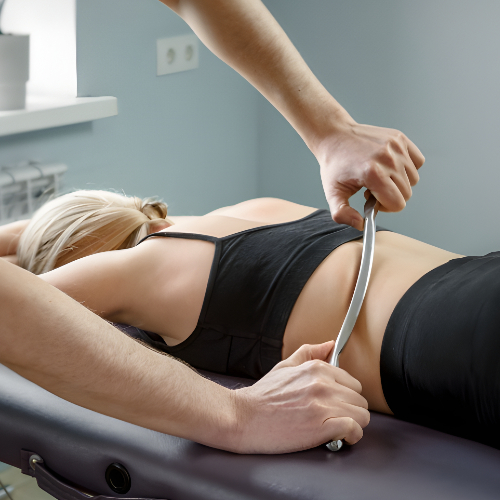
The Graston Technique in Bronx, NY helps people move more comfortably when stiffness, tightness, or lingering discomfort limits daily activity. The technique is a form of instrument-assisted soft tissue mobilization (IASTM) that addresses areas where muscles and connective tissue do not move freely.
At Pelham Physical Medicine Diagnostic & Treatment Center, our physical therapists use the Graston Technique as part of an active physical therapy plan to improve tissue mobility, support smoother movement, and help patients return to daily activities with greater ease.
A Closer Look at the Graston Technique
The Graston Technique uses specially designed stainless steel instruments to glide over the skin and address areas of soft tissue restriction. These tools help therapists identify changes in tissue texture and apply targeted pressure where movement feels limited.
Patients may explore the Graston Technique when stretching alone does not improve mobility or when tight areas continue to interfere with walking, lifting, reaching, exercise, or other activities. Some people experience pulling or stiffness during movement, while others notice lingering soreness or discomfort after activity.
By improving how soft tissue moves and responds during activity, the Graston Technique can help create a better foundation for exercise and functional movement.
When the Graston Technique May Be Used in Care
Physical therapists at Pelham Physical Medicine Diagnostic & Treatment Center may use the Graston Technique when soft tissue restriction limits motion, affects exercise tolerance, or contributes to discomfort. It may also be considered when movement remains guarded or rehabilitation progress slows despite strengthening and movement-based treatment.
The technique is not applied automatically. Therapists evaluate movement, tissue response, activity demands, and individual goals before determining whether it is appropriate. The Graston Technique supports recovery by preparing restricted tissue for active rehabilitation rather than replacing exercise or movement training.
Situations Where the Graston Technique May Help
The Graston Technique may be appropriate for patients experiencing:
- Muscle tightness that limits movement
- Soft tissue restriction after injury
- Stiffness following surgery or immobilization
- Tendon discomfort or irritation during repetitive activity
- Reduced mobility affecting daily tasks
- Lingering soreness after physical activity
- Movement limitations that slow rehabilitation
- Difficulty progressing with strengthening exercises
- Discomfort or stiffness that does not improve with stretching alone
- Movement restrictions that interfere with work, exercise, or recreation
These challenges may improve when soft tissue mobility and movement quality are addressed as part of a comprehensive physical therapy plan.
How the Graston Technique Supports Your Recovery
The Graston Technique works best when paired with exercise, movement training, and education. Therapists at Pelham Physical Medicine Diagnostic & Treatment Center integrate targeted soft tissue treatment into active care to support functional progress.
- Targeted soft tissue work improves tissue glide, supporting smoother movement.
- Reduced tissue restriction improves mobility, supporting daily activities.
- Improved circulation supports tissue health and recovery.
- Tissue preparation can improve tolerance to exercise, supporting rehabilitation progress.
- Reduced tightness and resistance can improve comfort and confidence with movement.
- Combining soft tissue treatment with movement training improves carryover into functional activities.
Each element works together to help patients move more freely and participate more effectively in their rehabilitation.
How the Graston Technique Fits Into Physical Therapy
The Graston Technique is one tool within a movement-focused physical therapy approach. Physical therapists use it to address soft tissue limitations that may interfere with range of motion, strength, coordination, and functional movement.
After treatment, patients apply improved mobility through guided exercises and functional movement tasks. This approach keeps care active and goal-driven, using the Graston Technique to help make movement training more comfortable and effective.
Regaining Movement Without Unnecessary Resistance
When soft tissue restrictions limit motion, everyday activities can feel more difficult than they should. The Graston Technique helps address these restrictions so movement can feel more fluid and controlled.
Pelham Physical Medicine Diagnostic & Treatment Center incorporates the Graston Technique into individualized physical therapy plans that prioritize movement quality, active rehabilitation, and functional goals. Contact the clinic today to learn how the Graston Technique in Bronx, NY can support your recovery and help you move with greater confidence.
Frequently Asked Questions
What does the Graston Technique feel like during treatment?
Is the Graston Technique used by itself or with exercise?
Does the Graston Technique address stiffness even if pain is minimal?
Can the Graston Technique be used for long-standing movement restrictions?
How do therapists decide if the Graston Technique is appropriate?
Your Next Steps…
- Request An Appointment
- Receive A Custom Treatment Plan
- Work Hard and Progress In Your Recovery
- Recover & Enjoy Life Pain-Free